Are your tyres roadworthy? Here’s how to check

Last updated on 19th November, 2025
A little tyre maintenance can go a long way. Well-maintained tyres tend to last longer and improve fuel efficiency, saving you money. But most importantly, they help you and others stay safe on the road.
A family loading a car in a driveway, with children running and a woman smiling.

When you take out car insurance, you agree to keep your car in good condition – including your tyres. Poor tyre condition increases your risk of an accident, a rejected claim or a voided insurance policy. That’s why we’ve put together this guide to help you stay safe and covered.

What you'll learn:

Tyres are your vehicle’s only contact with road surfaces. So, driving with the recommended tyre pressure improves vehicle handling, keeping you safer. Too little or too much air in your tyres may cause blowouts or affect your control of the car.

  • Tyres without enough air wear faster. This may reduce their grip on the road, increasing your stopping distance by several metres.
  • Getting through fuel quickly? If your tyres aren’t inflated enough, your engine works harder. This wastes fuel, affecting your wallet and the environment.
  • Putting too much air in your tyres can lead to reduced grip and a bumpy ride.

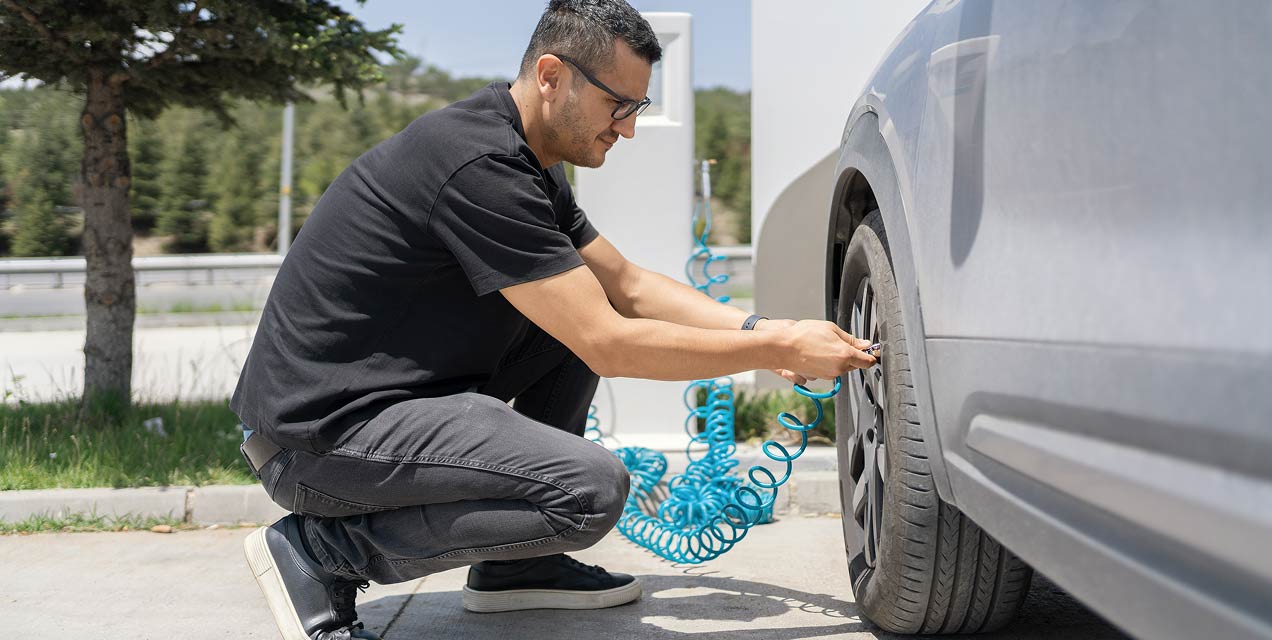
Tyre pressure is measured in PSI (pounds per square inch) and tyres typically lose about 1 PSI per month. If you’re often behind the wheel, it’s a good idea to check your inflation pressure every two weeks. Also, check it before long road trips.

For the most accurate reading, check the pressure when your tyres are cold.

  • Use the air pump at your local service station or tyre shop.
  • Remove the valve cap and press a gauge firmly onto the valve stem. That’s the small tube where you add air.
  • The gauge will show your current PSI reading.
  • Once you’ve adjusted the pressure, replace the valve cap firmly.

Each vehicle needs a specific PSI. Car manufacturers may provide different PSIs for front and rear tyres, and normal versus heavy loads. Here’s how to find the correct tyre pressure:

  • Look for a sticker inside the driver's door frame, glove box or engine bay.
  • Check your owner's manual.
  • Look for a sticker on the fuel filler flap.

If you drive often, check your tread depth monthly. Planning a road trip? Check your tread depth early so you’ve got time to get any issues fixed.

The minimum tyre tread depth in Australia is 1.5 mm (NSW Government: Roadworthiness). Driving on tyre tread that’s below 1.5 mm is illegal and dangerous.

Place the tread gauge in the main grooves of the tyre. This is an accurate way to measure wear on your tyres.

TWIs are marks spaced evenly along the tyre tread. They may be small, raised bars between the main tread grooves. An arrow or icon on the tyre might point you towards them. When your tread wears down to these bars or marks, it’s time to replace them.

No gauge or TWIs? No problem. With Drive’s simple tyre tread depth test, you can use a 20 cents coin. Use the reverse side and insert the coin into the tread groove. If you can see any part of the platypus’s bill, your tyre tread is too low and needs replacing.

Carry out regular checks to spot anything unusual that could signal trouble on the road. Look out for uneven tyres and uneven tyre wear.

The sidewall is the tyre’s surface. Check for sidewall cracks, deep cuts or bulges. These could cause tyre failure (Transport Victoria: VSI 16 - Tyre maintenance and repair).

Checking your tyre tread patterns may reveal pressure issues that could cause you a headache on the highway.

  • Does the centre of the tyre look worn? This could suggest it has too much air. 
  • Wear on both edges of the tyre could suggest not enough air.
  • Uneven tread wear. One-sided wear may mean wheel alignment problems.

Sharp debris like rocks or glass can get stuck in tyres. No one wants a slow puncture. 

Check the bead, where the tyre meets the rim. Damage here may cause slow leaks and tyre failure.

Rotating your tyres may be a smart move to get more wear from them. Here are some reasons why:

  • Even up the wear: Front tyres wear differently from rear tyres. Rotation helps your tyres wear evenly, extending their life.
  • Front vs. 4 x 4 drive patterns: Front-wheel drives need more frequent rotation. However, for 4WD vehicles, consider a cross-pattern rotation.

A tyre specialist can rotate your tyres, but how they’ll do this depends on your vehicle.

  • Vehicle-specific patterns: Your car manual will show a rotation pattern. Most cars use a cross pattern – moving tyres diagonally – or front-to-back rotation.
  • Directional tyres: These tyres roll in one direction, so they can only rotate front to back on the same side. Arrows on the sidewall will show the rotation direction. 

This depends on how far you drive. Tyre Review suggest tyre rotation at least every 10,000 km.

Wheel balancing makes sure your tyres spin evenly. Whereas wheel alignment makes your tyres point in the right direction. Both affect how your car handles the road, and a qualified tyre specialist can fix them.

Unbalanced wheels may cause your tyres to wear down faster and make driving uncomfortable. Take your car to the balancing machine at the service centre or tyre shop when any of the following apply:

  • Your car needs new tyres installed.
  • After you’ve hit the kerb or large potholes.
  • You feel steering wheel vibrations while driving.

Tyre Review says these are the warning signs that you need an alignment:

  • Your car pulls to one side when driving straight
  • Your steering wheel isn’t centred when you’re driving straight
  • Your tyres show uneven or unusual tyre patterns
  • Your tyres squeal during normal driving
  • Your steering feels loose or unresponsive

You may have been a car owner for a long time, but it’s easy to overlook certain things when life gets busy. Here are a few pointers.

If any of the valve caps are missing, get them replaced. They keep out dirt and moisture. Also, rubber valve stems can crack with age.

Small stones and rocks can work their way into your tyres. It’s a good idea to regularly remove stones from the tread grooves.

Look for any bends or cracks in your wheels. Damaged wheels can cause vibration and stop your tyres from connecting with the road properly.

Clean your tyres with soap and water regularly. Avoid using tyre shine products on the treads as they can reduce grip.

Book your car in for its regular service with a registered mechanic. Meanwhile, if you spot any of the following, get a tyre specialist’s help right away.

  • Bulges or cuts deeper than 6 mm in your tyres, or persistent or slow leaks.
  • Any unusual vibrations while driving – don’t ignore them.
  • Sidewall repairs
  • Bead damage
  • Wheel alignment

To find a tyre specialist, ask your friends and family for recommendations and check out online ratings. Also, look for industry certifications, such as the Certificate II in Automotive Tyre Servicing Technology.

Regular checks can help prevent most tyre problems and lessen your risk of an accident. Your car insurance could be affected by your car’s condition, including your tyres. Remember, your tyres are your only contact with the road. Keeping them in good shape isn’t just smart – it helps you and others stay safe.

The legal minimum tread depth is 1.5 mm in Australia, but it’s safer to replace them at 3 mm. That’s because tyres with less tread have less grip and may take longer to stop, increasing your risk of an accident.

If your tyres wear down below 1.5 mm, they're unroadworthy, illegal, and dangerous. Also, your car insurance won’t cover an unroadworthy vehicle.

If your tyres are showing wear and tear, you should replace them. Concerned about your tyres? Contact a tyre specialist or a registered mechanic to get them checked by a professional.

This article has been prepared by Allianz Australia Insurance Limited ABN 15 000 122 850 AFSL234708 ("Allianz"). It is a summary of key concepts and not meant to represent the complete picture on any given matter. It is not meant to be legal advice. The information should be read in conjunction with the relevant legislation and regulations. In some cases, information has been provided to us by third parties and while that information is believed to be accurate and reliable, its accuracy is not guaranteed in any way.

Any opinions expressed constitute our views at the time of issue and are subject to change. Neither Allianz, nor its employees or directors give any warranty of accuracy or accept responsibility for any loss or liability incurred by you in respect of any error, omission or misrepresentation in this article.

Explore our Help page for questions about your policy, claims, payments, and more. If you need to reach us, we're ready to connect.

Allianz acknowledges Aboriginal and Torres Strait Islander peoples as the Traditional Custodians of the lands on which we live and work across Australia. We pay our respect to First Nations Elders past and present.

Any advice here does not take into account your individual objectives, financial situation or needs. Terms, conditions, limits, and exclusions apply. Before making a decision about this insurance, consider the relevant Product Disclosure Statement (PDS)/Policy Wording and Supplementary PDS (if applicable). Where applicable, the PDS/Policy Wording, Supplementary PDS and Target Market Determination (TMD) for this insurance are available on this website. We do not provide any form of advice if you call us to enquire about or purchase a product.

Allianz Australia Insurance Limited ABN 15 000 122 850 AFS Licence No. 234708 is the insurer of any general insurance products offered, and Allianz Australia Life Insurance Limited ABN 27 076 033 782 AFS Licence No. 296559 is the insurer of any life insurance products offered. Each entity is responsible for any statements and representations made about its products, on this website.