
Car servicing: A comprehensive overview
Regular servicing is an important part of owning and caring for a vehicle. Following a servicing schedule helps your car last longer, keeps its resale value high, and improves fuel efficiency.
This article is for traditional cars with combustion engines. See ourtop tips to maintain your EV for the different service requirements for electric vehicles.

Types of car service
Minor car services
A minor service generally includes oil and filter changes, checking fluid levels, inspecting brakes, and a general safety check.
A minor service typically takes one to two hours. They're recommended every six months or 10,000 kilometres. This can differ depending on the vehicle's use.
Major car services
A major car service is more comprehensive. They include all the tasks of a minor service, plus extra checks and replacements like spark plugs, air filters, and a detailed vehicle inspection.
A major service typically takes two to four hours. This full car service is usually recommended every 12 months or 20,000 kilometres.
Interim car services
An interim car service is typically performed between major services. It includes basic checks and maintenance to make sure the vehicle is running smoothly.
An interim service typically takes an hour to an hour and a half.
What does a car service include?
During a service, key tasks are completed to keep your car in optimal working condition. Depending on the type of service, these can include the following checks.
Oil and filter change
Your engine oil and oil filter need to be changed regularly to remove any dirt and other contaminants. This prevents excessive wear on your engine.
Fluid top-up
Essential fluids, such as coolant, brake fluid, windscreen washer fluid, and power steering fluid are checked during a car service. They’re topped up as needed to maintain their proper levels.
Brake inspection
Along with brake fluid levels, the brake pads and rotors on your vehicle are checked for wear and tear and replaced as needed.
Suspension and steering check
The suspension and steering parts are checked for wear and tear. Identifying these early means repairs can be done on time.
Tyre check
Your tyres are the connectors between your vehicle and the road. It’s essential during your service to make sure they’re in good shape and inflated to the correct pressure. This can increase the life of your tyres and reduce fuel consumption.
Tyres wear differently depending on where they’re placed on your vehicle. Having them rotated during a service can reduce uneven wear and help extend the life of your tyres.
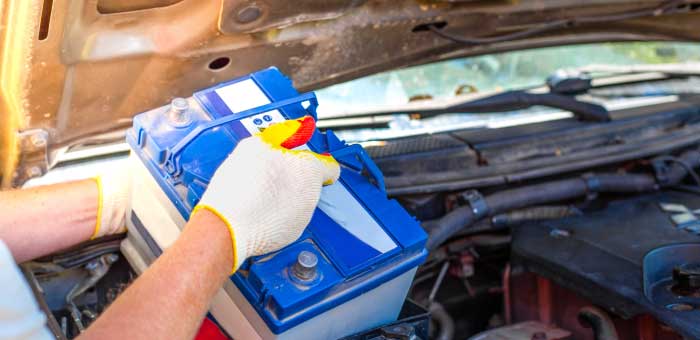
Battery check
Different factors such as the climate and vehicle usage can influence how long a car battery will last.
During a car service, the battery will be checked for health and charge level. This helps avoid unexpected breakdowns and ensures your car starts reliably.
If your battery needs replacing, you can save money by replacing your battery yourself. Our step-by-step car battery replacement guide shows you how to safely change your car battery at home.
Light check
A thorough check of all exterior and interior lights typically includes the headlights, taillights, indicators, and brake lights. This is an important safety requirement to meet road regulations.
Air filter check
The air filter will be inspected and cleaned, or replaced if needed. This is to make sure that proper airflow is maintained to the engine. This helps with vehicle performance and fuel efficiency.
Spark plug replacement
Spark plugs, which are responsible for igniting the fuel-air mixture in the engine, are replaced at recommended intervals to keep everything working smoothly.
Benefits of a regular car service
Regular car servicing helps it run reliably, smoothly, and safely on the road.
Some of the key benefits of regular servicing are listed below.
1. Improved safety
Regular servicing can help identify and address potential issues before they become a problem. This can prevent unexpected issues that could compromise your safety while driving.
2. Reduced repair costs in the long run
Regular maintenance prevents inconvenient breakdowns and emergency repairs. This can save you money in the long run.
For example, a small oil leak might seem like a minor issue but can lead to engine damage. This then requires costly repairs or even a complete engine replacement.
3. Longer lifespan of your vehicle
Regular car maintenance helps you catch issues early and take proactive steps to care for your car's parts, which can extend its lifespan.
4. Improved performance and fuel efficiency
When everything is well maintained, your vehicle can run at its maximum efficiency. This provides better performance and fuel economy.
5. Higher resale value
A documented service history demonstrates that your car has been well cared for. This makes it more attractive to potential buyers and can improve the resale value.
Regular car servicing not only helps to keep you and your passengers safe, it’s an investment in the fuel efficiency and the longevity of your car.
6. Insurance doesn’t cover mechanical faults
Comprehensive car insurance covers loss or damage from insured events such as collisions , fire, theft, and storms. Mechanical faults can be caused by wear and tear and lack of maintenance resulting from common issues like corrosion, friction, leaks, or rust. While they can be unexpected and make your vehicle unsafe to drive, mechanical faults aren't considered to be an insured event and wouldn’t usually be covered by your car insurance.
Staying on top of your car servicing can help prevent mechanical faults and keep your vehicle roadworthy.
Want to find out more about our Car Insurance policies?
Related articles


Disclaimer
This article has been prepared by Allianz Australia Insurance Limited ABN 15 000 122 850 AFSL 234708 ("Allianz"). It is a summary of key concepts and not meant to represent the complete picture on any given matter. It is not meant to be legal advice. The information should be read in conjunction with the relevant legislation and regulations. In some cases, information has been provided to us by third parties and while that information is believed to be accurate and reliable, its accuracy is not guaranteed in any way.
Any opinions expressed constitute our views at the time of issue and are subject to change. Neither Allianz, nor its employees or directors give any warranty of accuracy or accept responsibility for any loss or liability incurred by you in respect of any error, omission or misrepresentation in this article.
Any advice here does not take into account your individual objectives, financial situation or needs. Terms, conditions, limits, and exclusions apply. Before making a decision about this insurance, consider the relevant Product Disclosure Statement (PDS)/Policy Wording and Supplementary PDS (if applicable). Where applicable, the PDS/Policy Wording, Supplementary PDS and Target Market Determination (TMD) for this insurance are available on this website. We do not provide any form of advice if you call us to enquire about or purchase a product.
Allianz Australia Insurance Limited ABN 15 000 122 850 AFS Licence No. 234708 is the insurer of any general insurance products offered, and Allianz Australia Life Insurance Limited ABN 27 076 033 782 AFS Licence No. 296559 is the insurer of any life insurance products offered. Each entity is responsible for any statements and representations made about its products, on this website.