
Stay safe on the roads: Five essential driving tips 

Last updated on 26 August, 2025

Driving through Australia’s diverse landscapes is breathtaking, but if the weather turns bad it can be tough. Wet, slippery roads and poor visibility can make driving more challenging. We care about your safety, so we’ve put together these tips for a safer drive. 
A couple standing next to their broken-down car, using a mobile phone to call for help.

Whether you’re a seasoned driver or new behind the wheel, driving in bad weather can be daunting. Our weather can change quickly, with heavy rain, hail, or mist making it hard to see and drive safely. This increases the risk of road accidents, so drivers need to stay alert.

With Allianz Comprehensive Car Insurance, we’ve got you covered. We also want to help you prepare as best you can for difficult road conditions. Let's dive into these key tips to help you stay safe on the road when the skies aren’t clear.


Imagine you’re getting ready for a road trip with your family. You’re excited about the drive, but you notice your front tyre looks a little flat. Before setting off, you need to make sure your vehicle’s ready for the road ahead.

For your car to handle wet roads, your tyres need good tread and proper inflation. According to The Times Australia Driving, under-inflated tyres can increase the risk of skidding. Whereas over-inflated tyres can make it harder to stop.

The wrong tyre pressure can cause hydroplaning, also called aquaplaning. It’s when your tyres lose contact with the road due to a layer of water, causing the car to slide.

You can check your car owner’s manual for the recommended tyre pressure.

Next, check your windscreen wipers. The rubber blades can wear out, causing streaks that may reduce your visibility. Make sure you replace any worn out wipers. 

Take action: Make sure you regularly maintain your car, and double check tyres and windscreen wipers before you set off. 

You’re driving on a wet road, the rain tapping on your windshield. Suddenly, the car ahead stops abruptly. Is there enough room to stop?

Wet roads need a different driving approach. Reducing your speed is crucial for keeping in control of your car and preventing hydroplaning. That’s when a layer of water builds up between your tyres and the road surface, causing a loss of traction. 

Keeping a safe distance from the vehicle ahead is equally important. Queensland Government road safety during wet weather recommends you double the distance between your car and the car in front. This means keeping at least a four-second gap, so you’ll have more time to react if the vehicle in front stops suddenly. 

Take action: Adjust your driving style to the road conditions, slowing down and keeping a larger gap between you and the vehicle in front.

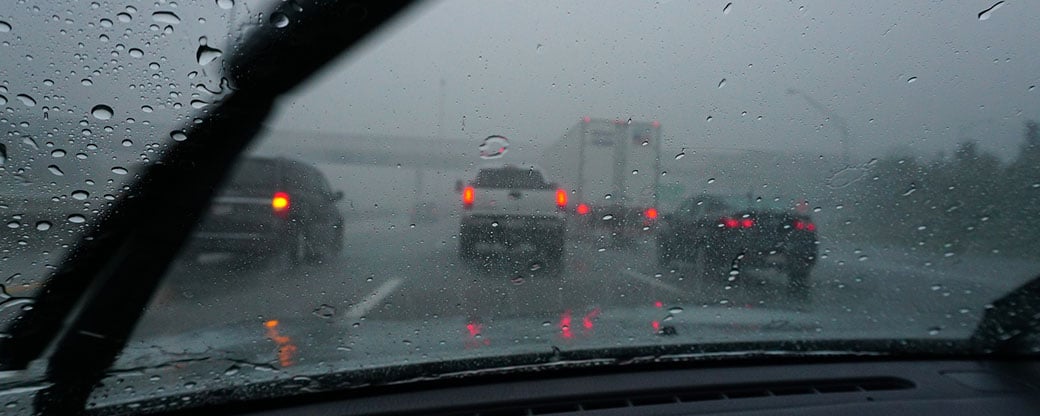
A driver’s view of a motorway in heavy rain while keeping a safe distance from the vehicle in front

There’s a foggy stretch of road ahead, the mist swirling around you, making it hard to see where you’re driving.

Rain, hail, mist, and fog can affect your visibility, so slow down or find a safe place to park until conditions improve. Don’t use high beams in foggy conditions. They can make visibility worse by reflecting off the fog and causing glare.

Take action: Make sure your car’s lights, including indicators, brake, and hazard lights, are clean and working well. You need to see others and make sure others can see you on the road.

It’s raining and you’re listening to your favourite playlist as you’re driving home. Suddenly, you need to swerve to avoid a pothole. Remember to use gentle braking and steering to stay in control of your car. 

On wet roads, sudden movements from accelerating, braking, or sharp turns could lead to aquaplaning. You might then start to skid, and, potentially, lose control of your vehicle. 

If you start to aquaplane, Road Safety Education says not to brake suddenly as it could cause skidding. Instead, gradually ease your foot off the accelerator and hold the steering wheel straight – in the direction the front of your car needs to go. When the car starts to gain control, you can gently brake to reduce your speed.

Take action: Adjust your driving for wet roads and other difficult road conditions, no matter how well you know the road. Check out Seat Belters on Spotify, your playlist for safer driving.

You’re driving to a hotel for a weekend break, with dinner booked at a great restaurant. However, road closures due to flooding are causing delays. 

Before heading out, check the weather forecast and road conditions. Plan your route in advance to try to avoid areas known for flooding. 

Navigation apps can give you live updates on road closures, accidents, and traffic. This can help you change your route, if needed. Local radio may also have advice.

Try to allow extra time for your journey in case of potential delays and so you can enjoy a stress-free drive.

If there’s heavy rainfall or flooding, remember you should never drive through floodwater. It may be deeper than it looks, and safety is your priority. For tips on staying safe on the road during extreme weather, visit the NSW Government’s Centre for Road Safety.

Pack essentials like first aid, blankets, a flashlight, non-perishable snacks, and water. A set of jump leads could also be useful if your car’s battery lets you down. 

If you get stuck or stranded, your emergency kit can keep you safe and comfortable until help arrives. Remember to keep emergency contacts in your phone, including your insurer’s phone number.

Take action: Plan your route and pack an emergency kit.

A driver enjoying a safe drive with his passenger.

Allianz Motor Claims data for 2024 found that 80% of motor claims came from collisions. These were mostly for cars hit in the rear, followed by accidents caused by failure to give right of way. 

Other common claims included hitting an object and reversing mishaps. However, the highest number of claims was for windscreen damage.

Knowing these common claim types may help you take extra care when you’re on the road.

Driving in bad weather doesn't have to be daunting. Make sure your car is ready, check tyres and windscreen wipers, adjust driving for wet weather, and stay alert. Packing an emergency kit is also a good idea, especially for longer drives. Use these tips to help you stay safe and enjoy a smooth drive, whatever the weather.

Check out more tips for drivers and vehicle owners.

This article has been prepared by Allianz Australia Insurance Limited ABN 15 000 122 850 AFSL234708 ("Allianz"). It is a summary of key concepts and not meant to represent the complete picture on any given matter. It is not meant to be legal advice. The information should be read in conjunction with the relevant legislation and regulations. In some cases, information has been provided to us by third parties and while that information is believed to be accurate and reliable, its accuracy is not guaranteed in any way.

Any opinions expressed constitute our views at the time of issue and are subject to change. Neither Allianz, nor its employees or directors give any warranty of accuracy or accept responsibility for any loss or liability incurred by you in respect of any error, omission or misrepresentation in this article.

Explore our Help page for questions about your policy, claims, payments, and more. If you need to reach us, we're ready to connect.

Allianz acknowledges Aboriginal and Torres Strait Islander peoples as the Traditional Custodians of the lands on which we live and work across Australia. We pay our respect to First Nations Elders past and present.

Any advice here does not take into account your individual objectives, financial situation or needs. Terms, conditions, limits, and exclusions apply. Before making a decision about this insurance, consider the relevant Product Disclosure Statement (PDS)/Policy Wording and Supplementary PDS (if applicable). Where applicable, the PDS/Policy Wording, Supplementary PDS and Target Market Determination (TMD) for this insurance are available on this website. We do not provide any form of advice if you call us to enquire about or purchase a product.

Allianz Australia Insurance Limited ABN 15 000 122 850 AFS Licence No. 234708 is the insurer of any general insurance products offered, and Allianz Australia Life Insurance Limited ABN 27 076 033 782 AFS Licence No. 296559 is the insurer of any life insurance products offered. Each entity is responsible for any statements and representations made about its products, on this website.