Allianz Australia

Best General Insurance Company of the Year 2010*
General Insurance Company of the Year 2009+

Call us on 13 1000

Bookmark and Share

Preparing your home for a bushfire

Bushfires are a natural part of the Australian environment and occur regularly, but many Australians fail to prepare for them. While there are elements of a bushfire that you can't control - like the weather - planning and preparing your home for a bushfire can dramatically increase the chances of your family and your home surviving.


If you live in a bushfire-prone area, it is your responsibility to reduce the risk to your family and your home.


If you live in a bushfire prone area, it is your responsibility to reduce the risk to your family and your home and take action to survive a bushfire. Fire and Rescue NSW recommends these simple points to reduce the threat of a bushfire affecting your home:

  • Clean leaves from gutters, roofs and downpipes regularly, and fit quality metal leaf guards.
  • Mow your grass regularly, both in the front and back yards.
  • Install fine steel wire mesh screens on all windows, doors, vents and weepholes.
  • Fit metal NOT plastic fly screens on windows and doors.
  • Enclose open areas under your decks and floors.
  • Seal all gaps in external roof and wall cladding.
  • When installing LPG cylinders around your home, make sure that pressure relief valves face outwards so that flame is not directed towards the house.
  • Keep your backyard tidy, free from any build up of flammable material.
  • Relocate any flammable items away from your home including woodpiles, paper, boxes, crates, hanging baskets and garden furniture.
  • Remove excess ground fuels and other combustible material.
  • Do not deposit tree loppings, grass clippings and other materials that could aid a fire on your property, or on council reserves or bushland.
  • Ensure your garden hoses are long enough to reach the perimeter boundary of your property.
  • Plant trees and shrubs that are less likely to ignite due to their lower oil content.
  • Trim low lying branches two metres from the ground surrounding your home.
  • If you have a swimming pool, have a Static Water Supply sign placed on your front fence. Contact your local fire station for information.
  • Consider purchasing a portable pump to use from your swimming pool or water tank.
  • On Total Fire Ban days obey regulations regarding barbecues and open fires.
  • Ensure ALL members of the family know where the community evacuation area is.
  • If there is a Community Fire Unit nearby, consider becoming a member.
  • Make sure that if there is a fire hydrant outside your home it is easily located and not obstructed.

In the event of a bushfire

Preparation is not just about cleaning up around the house and having a plan. It is also about making sure you consider your physical, mental and emotional preparedness.

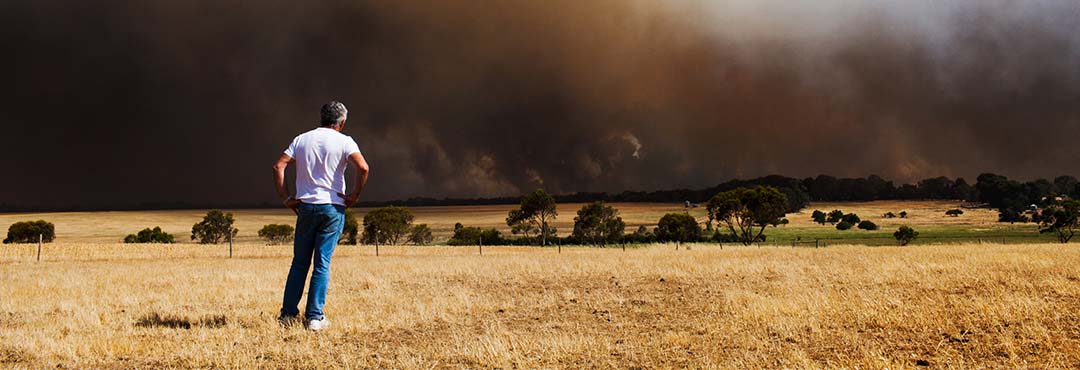
A bushfire can be a terrifying situation. Strong gusty winds, along with intense heat and flames will make you tired quickly. Thick, heavy smoke will make it difficult to see and breathe. The roaring sound of the fire approaching will deafen you. Power and water may be cut off. You may be isolated. It will be dark, noisy and physically and mentally demanding.

Bushfires are a natural part of the Australian environment and occur regularly.


If you have any doubts about your ability to cope, you should plan to leave early. In the event of bushfire threatening your home, Fire and Rescue NSW recommends you:

  • Stay calm.
  • Don't enter the bush if smoke or fire is in the area. Report all fires, ring 000.
  • Check if elderly neighbours need assistance.
  • Patrol the outside of your home, putting out any embers and spot fires that may start.
  • Close all windows, doors and shutters.
  • If possible, block your downpipes (a sock full of sand/soil will help) and fill roof gutters with water.
  • If possible, block gaps beneath doors with wet blankets or towels.
  • Collect water in buckets/bath.
  • Consider keeping valuables items and documents in a fire resistant safe or metal cabinet, or have them packed and ready to go.
  • Comply with police if ordered to evacuate.
  • Bring your garden hose inside so that it won't melt in the fire and can still be used.
  • Wet down timber decks and gardens close to the house if the fire is approaching.
  • Do not stand on your roof with your hose. In bushfires, often more people are injured by falling from roofs than suffering burns.
  • Keep ladders, shovels and metal buckets at hand to help put out spot fires.
  • Keep a torch and a portable battery operated radio in the home in case electricity supply fails.
  • Drink plenty of water so you do not dehydrate.
  • Move any fire fighting equipment to a place that it will not get burnt.

For more information, contact your local fire station or fire control centre. In an emergency call 000.

For more information visit the Fire and Rescue NSW website.

Get a home insurance quote online now

Buy online & save up to 10%* on new Home Insurance policies. *Conditions apply Get a home insurance quote Conditions apply